Welcome  |   Contact  |   Calendar  |   News  |   Services  |   Music  |   History  |   Inside  |   Gallery  |   Links  |  
St. Paul's Church - Birmingham England
History: From the Archives
The Church of England
 
the Church
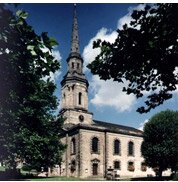
Set in a timeless Georgian square, with rolling lawns and tree-lined walks.
>Return to From the Archives


From the Archives
(02) Notes from the Choir Stalls
by Margaret Richards, October 2008


As I make my small contribution to the soprano section of the choir, I feel privileged to be working alongside other musicians and of course Paul Carr our organist and choir master. We are part of the ongoing tradition of music at St. Paul’s begun in 1779.

James Kempson, the first choir master was a well known figure in Birmingham’s musical circles during his long and active life. He was a contemporary of another James – James Watt. Perhaps ‘our’ James had occasion to meet with Boulton, Watt and other famous local worthies, but in the 21st century sadly, he is long forgotten. James was offered the post of clerk and choir master of St. Paul’s in 1777, soon after the laying of the foundation stone. He had already a considerable reputation as a choir master in Birmingham having been associated with St. Philip’s all his life; he was baptised there in 1742. At the age of 20 he was directing the choir at St. Bartholemew’s and had combined the choirs of St. Philip’s and St. Bartholemew’s into a singing group which met at Cooke’s Tavern in the Cherry Orchard.

This was situated at the corner of Cherry Street and Temple Row, opposite St. Philip’s. This merry band of musicians became known as The Musical and Amicable Society. Their subscriptions helped needy members and the rehearsals were a musical social evening in the tavern. There was a book of rules and the title page included these words –
“To our musical club, here`s long life and prosperity…may concord and harmony always abound… … May the catch and the glory go about and about, and another succeed to the bottle that’s out”

Three years later in 1765 saw the formation of the Chappell Society, an offshoot of the Musical and Amicable Society. This group was to be more ‘strictly musical using first class printed music and instruments of superior quality’. The rules included no smoking during the performance! In 1766 when the building of the General Hospital began, James suggested to friends on the board that there should be a Musical Entertainment to raise money for the building fund. So in 1768 there was the first Music Festival. There were performances in the theatre and at St. Philip’s there was a performance of Handel’s Messiah with James as chorus master.

Twelve years later in 1778, James arranged another Festival, this to raise money for the building funds for the unfinished hospital and for St. Paul’s. Another Festival was held in 1784 and so began the Triennial Musical Festivals in Birmingham raising money for the General Hospital. This tradition continued until 1912, attracting new works by famous composers, many now being in the standard choral repertoire. The Chappell Society continued its existence until 1847, providing a large group within the massed choirs of the festivals. It is likely that the remaining members became the nucleus of the recently formed Birmingham Festival Choral Society which began life in 1843 and is still one of the main choral societies in Birmingham today. James `Daddy` Kempson was held in great affection by his choirs and in his later years the Chappell Society commissioned a portrait of him by Henry Wyatt.

In 1791 there was a special festival performance at St. Paul’s “for defraying the expenses of a window in stained glass for an altar piece… …”
Many special musical events were held in subsequent years, Handel being the favoured composer. Some of the performances were an integral part of a church service. Some were to raise money for charity or a new organ, of which there were several! Organists at St. Paul’s were also to be heard at the Town Hall. ‘Mr Munden’ who played on the new organ at St. Paul’s in 1830 became the first organist at the Town Hall in 1834. He was succeeded in 1837 by George Hollins who held the post until 1841.

George Hollins and James Kempson were buried in St. Paul’s churchyard. The Hollins family memorial can be seen in church. James’ epitaph reads:
'I know that my redeemer liveth'
Sacred to the memory of James Kempson 21 years Clerk of this chapel and 50 years assistant conductor of the Oratorio Society of this town, who departed this life March 18th 1822 aged 79 years also Mary his wife… …


>Return to From the Archives